Showing posts with label Top 10 Facts. Show all posts

Wednesday, April 6

Top 10 Facts About Sharks

WhiteShark_drawing


  • A shark does not have one bone in its body.  Its skeleton is made up of cartilage.  Cartilage is a tough material, like the material that shapes your ear.
  • The Swell Shark, found in New Zealand, barks like a dog.
  • Weird things have been found inside a shark, such as a nail, a bottle of wine, a treasure chest, coats, a suit of armor, a drum and a torpedo.
  • A shark’s skin is covered with denticles, which are small, razor-sharp teeth.  Denticles can be removed from a shark’s body.  After the small teeth are removed, the remaining skin can be made into very strong leather.  A pair of shoes made from shark leather can last up to four times longer than shoes made with cowhide.

shark

  • Sharks have very good senses.  Sometimes a shark is called “a swimming nose”, for its great sense of smell.  Sharks can easily detect prey that is in the sand, as well as at night.  A shark also has a remarkable sensitivity to vibrations in the water.  It can feel the movements made by other animals that are hundreds of feet away.  They can hear sounds from thousands of feet away. Sharks can tell the direction from where the sound is coming from, too.
  • Sharks cannot eat Puffer Fish, because the Puffer Fish inflates like a balloon and pokes the shark’s mouth with its sharp needles.
  • Most sharks give birth to their babies.  Only a few sharks lay eggs.  Most sharks have six to twelve babies at a time, but the Hammerhead and Tiger Shark can have as many as 40 babies at a time.
  • Most species of sharks can swim up to 20-40 miles per hour.  A Mako Shark has been recorded at more than 60 miles per hour.
  • A shark has three types of fins.  They have two dorsal fins on their back, one fin beneath their body, called the pectoral fin (not all species have it), and the caudal fin is the tail.
  • The Whale Shark is the biggest fish in the world

db_great_white_shark1-jaws-25

Wednesday, August 6

Top10 Roof top Bars

1. Sirocco

SiroccoBangkok, Thailand

No night out in Bangkok is complete without a couple cocktails at Sirocco. Perched on top of The Dome at State Tower, 64th floors above the hectic streets of Bangkok, this sexy rooftop bar boasts 360 degree views of the city with city lights in every direction, as far as the eye can see. If you’re looking for a picturesque place to dine, they also serve dinner.

The Dome at Sate Tower 1055 Silom Road, Bangrak, Bangkok 10500


2. The Penthouse


PenthouseMadrid, Spain

The Penthouse is an ultra-chic rooftop bar owned by Rande Gerber, celeb nightlife entrepreneur and husband of Cindy Crwford. It’s located on the roof of Hotel ME Madrid Reina Victoria, in Plaza Santa Ana, and has a great view of central Madrid. The crowd is dressed to kill, the waitresses are smoking hot the drinks are pricey and the place is often frequented by Spanish celebrities. Best to get here for happy hour, because although it’s open till 3am, the line to get in is insane after midnight.

Hotel ME Madrid Reina Victoria / Plaza Santa Ana / Princesa, 27 / Madrid Spain 28008 / Tel: (34) 91 5418200


3. Luna Bar

Luna BarKuala Lumpur, Malaysia

This super sexy rooftop and poolside bar is a hang out for the twenties and thirties nightlife scene in Kuala Lumpur. It’s got a long indoor bar with a chic design leading you out onto the breezy rooftop for the best views of the lights of KL. For a romantic night out, be sure to get there early to snag a private little enclave up against the glass.

Menara PanGlobal 34th Floor / Jalan Punchak (off Jl P. Ramlee) / Kuala Lumpur / Tel: +60-3-20262211


4. Rooftop Bar


RooftopMelbourne, Australia

An ultra cool venue for music, cinema, or just sunny boozing, this bar sits atop the Thai bar and restaurant, Cookie, on a six story 1920’s building in central Melbourne.

Rooftop Bar / Curtin House, Level 3, 252 Swanston Street / Melbourne, Australia


5. Gravity

GravityDublin, Ireland

Although not an open air bar, Gravity boasts an unobstructed 360 degree view of Dublin. It’s got a swanky style and comfortable seating right up against the glass to sit in while you enjoy the view from the highest bar in Ireland.

Top of The Guinness Storehouse / St James’s Gate / Dublin 8, Ireland / Tel: + 353 1 408 4800


6. Top Floor Bar

Top FloorLondon, United Kingdom

Looking for the perfect place to throw a swank party in London? The Top Floor Bar, the final floor of the Gherkin, London’s newest architectural darling, is available for private parties. The ultra modern venue sits under the spectacular glass cone roof and has stunning views of the city.

Top of the Gherkin / 30 St. Mary Axe / London, United Kingdom


7. Moon

MoonLas Vegas, Nevada

The Palms teamed up with the Playboy Club giving revelers in Vegas a sexy place to blow their money on the 53rd floor of the palms Hotel. The sound system here is rockin’ and although it can be tough to get in, it’s a great place to check out on Tuesday, Friday and Saturday nights.

The Palms Hotel 53rd Floor / 4321 W Flamingo Rd / Las Vegas, NV Tel (702) 940-7246


8. Captain Bar

CaptainShanghai, China

This cool rooftop bar has a wide variety of cocktails and a great view of The Bund and surrounding city lights. It’s usually a cool mix of locals and travelers which makes for a diverse and thirsty crowd.

6/F, 37 Fuzhou Lu / People’s Square / Bund,Metro Line 2 Nanjing Dong Lu Station / Shanghai, China


9. Hudson Sky Terrace

 HudsonNew York, New York

This super chill rooftop bar has great service, amazing sangria and everything else you could want on a hot New York afternoon. From an air conditioned game room to a hammock with a view of the river, the Hudson has you covered, but like many of NY rooftop hot spots, you must be a guest in the hotel to enjoy it.

The Hudson Hotel / 356 W. 58th St between Eighth and Ninth Aves / Tel 212-554-6317


10. Condesa DF Rooftop Bar

CondesaMexico City, Mexico

This is an awesome bar in an all-around cool hotel. The Condesa DF is decked out in extraordinary design, from the table cloths to the couches. This super-chic hotel only has 40 rooms so make sure to get a reservation, and make sure to hit its rooftop paradise for some cocktails as the sun goes down over Mexico City.(SOURCE:matadornights)

Sunday, July 20

Sunday, July 6

10 things to know about robots

The movie "Wall-E," a futuristic tale of a trash-compacting robot, has become a money-making machine at the box office. Here are some key components of robotics chicagotribune:

1. The word robot, coined by Czech playwright Karel Capek in his 1921 play "R.U.R. (Rossum's Universal Robots)," is based on the Czech word "robota," meaning forced labor or serf. The fictional robots in Capek's play were created chemically, not mechanically.

2. Here's a nightmare scenario: Robots learn to build new robots, replicating without human aid and eventually achieving world domination. In theory, at least, that could happen through nanotechnology, the science of manipulating materials on an extremely small scale. Nanotechnology expert Eric Drexler once envisioned tiny machines replicating out of control, overwhelming the Earth in a wave of "gray goo."

3. "Proprioception" is sometimes called the sixth sense. It means knowing where each part of your body is without having to look for it. This is natural for people, but very difficult for robots.

4. As household robots such as the Roomba vacuum cleaner gain popularity, clashes with pets are becoming more common. Los Angeles graphic designer Rob Sheridan has posted a YouTube video called "Puppy Vs. Robot! Epic Battle for Territorial Domination!" The video, featuring confrontations between Sheridan's pet Lola and a toy called Roboquad, has been viewed more than 2.4 million times.

5. Cyborgs--part man and part machine--are coming. In fact, some would say they're already here. Is a person with a heart pacemaker a cyborg? How about a person who attaches a cell phone to his ear? Scientists are working on a robot suit or exoskeleton that people could wear to increase their physical strength. The happy application: Disabled people might be able to walk. The darker side: Soldiers could fight longer and better.

6. Scientists are studying swarming behavior among robots--the collective actions of robots that have individual intelligence. Robot enthusiasts enjoy staging soccer matches between teams of machines, such as the Sony robo-dog Aibo. Daniel H. Wilson offers scarier swarming scenarios in his tongue-in-cheek but science-based book, "How to Survive a Robot Uprising." An army of robots that communicated with each other would be effective at hunting down people because if one robot spotted a person, all of them would instantly know where the person was. Wilson also postulates how all the appliances in a "smart home" could conspire to kill the owner.

7. The "Uncanny Valley" is a theory by Japanese roboticist Masahiro Mori suggesting that as robots become more humanlike, people's empathy with them increases. But Mori sees a drop-off--a valley--when the robot is not perfectly human but is alarmingly close and seems creepy, like the living dead. Filmmakers and critics have cited the Uncanny Valley as the reason some animation fails: It is neither close enough to reality nor far enough away to be comfortable to the viewer.

8. While androids--humanlike robots--dominate popular perceptions, many roboticists believe that the robots of the future will be limited-function machines that look nothing like people. One example is a snakelike robot being developed to find people trapped in the rubble of an earthquake.

9. The U.S. military may be struggling to sign up soldiers, but it's recruiting plenty of robots. Predator drones have become a key part of the arsenal, and robots are being used to defuse roadside bombs. The U.S. military's Defense Advanced Research Projects Agency sponsors a competition to develop an unmanned vehicle that can operate in urban environments. Congress has set a goal that one-third of the military's "operational ground combat vehicles" be unmanned by 2015.

10. Many Americans view robots as threatening, but the Japanese have fully adopted them, consistent with their Buddhist and Shinto principles. "If you make something, your heart will go into the thing you are making," Mori told the Tribune in 2006. "So a robot is an external self. If a robot is an external self, a robot is your child."

Tuesday, June 24

Top 10 Fuel-Efficient cars in US

1. Toyota Prius

Toyota Prius

2008 Toyota Prius, City: 48 mpg, Highway: 45 mpg, Combined: 46 mpg, Base Price: $22,160
The Toyota Prius, the gold standard for fuel economy, is a bit like steamed broccoli: utterly insipid but wholesome just the same. Iconic status was guaranteed when Hollywood types with air-conditioned mega-mansions trotted out Priuses as their green beards, even before the car was immortalized with its own episode of South Park. An anodyne ownership experience includes tepid acceleration, numb steering, and nonlinear brakes. Of note are the unbeatable fuel economy, the impressively low price, and the unique, futuristic lines that house a large amount of usable space. Stay tuned for the next-generation Prius and a plug-in version, which will further increase fuel economy, in 2011.

2. 2008 Honda Civic Hybrid

Honda Civic Hybrid

2008 Honda Civic Hybrid, City: 40 mpg, Highway: 45 mpg, Combined: 42 mpg, Base Price: $23,270
The Prius’s main contender is the Civic hybrid, a more quotidian approach to economical hybrid transportation. In rendering the hybrid more aerodynamic, Honda also made it one of the better-looking Civic offerings, more likely to appeal to those who don’t need to wear their environmentalism on their lapel, although this might be part of the reason it hasn’t seen nearly the sales success of the Prius. The Civic hybrid drives more like a regular car than the competition, is a more responsive handler, and is a touch less sluggish. The Civic’s hybrid system is simple and compact but doesn’t deliver quite the miserly numbers of the Prius.

3. Smart Fortwo

Smart Fortwo
2008 Smart Fortwo, City: 33 mpg, Highway: 41 mpg, Combined: 36 mpg, Base Price: $12,235
A small sum of money gets you a Lilliputian car that returns the third-best fuel mileage of any vehicle here. The Smart Fortwo delivers solidly on its niche-market promise. It’s the ultimate urban vehicular solution as defined by stylish cachet, excellent fuel economy, and—by virtue of being the smallest—being also the biggest gun in the parking wars. Your mileage may vary; ours did, with an average of four fewer mpg than the EPA’s combined number. Given that the Fortwo is the slowest-accelerating passenger vehicle in the country (say a Hail Mary before merging onto a freeway), a lead foot, with a resulting impact in fuel economy, is practically a safety requirement.

4.Nissan Altima Hybrid

Nissan Altima Hybrid

2008 Nissan Altima Hybrid, City: 35 mpg, Highway: 33 mpg, Combined: 34 mpg, Base Price: $26,140
The Altima hybrid is sold only in California and the seven eastern states that share the California Air Resources Board’s air-quality statutes, which is a shame because it delivers hybrid efficiency in a stylish, pleasurable-to-drive sedan. The Altima hybrid delivers similar fuel economy numbers to those of the Camry hybrid, which isn’t surprising considering Nissan licensed Toyota’s Hybrid Synergy Drive for the effort. Paired with Nissan’s 2.5-liter gasoline engine, the Altima hybrid returns performance numbers better than the standard model’s. It delivers on its sporty looks and design-forward interior with a fun, enthusiastic chassis and precise steering. If the name “Camry” makes your inner rebel cringe, you’d do well to consider the Altima hybrid.

5. Toyota Camry Hybrid

Toyota Camry Hybrid 2008 Toyota Camry Hybrid, City: 33 mpg, Highway: 34 mpg, Combined: 34 mpg(Ratings from 2008 model year), Base Price: $25,860
Yellow-paintbrush-wielding New York cabbies can’t be wrong. The Toyota Camry hybrid is good at moving passengers economically and without drama. Unlike the Altima hybrid, you can buy the Camry hybrid nationwide. Hybridization did nothing to impact the virtues that make the Camry an award-winning family-hauling appliance: laudable road manners, quiet and comfortable operation, and a highly competent overall experience. Stepping up to the hybrid also begets stability control and the top-of-the-line XLE interior package, minus leather seats.

6. Volkswagen Jetta TDI

Volkswagen Jetta 2009 Volkswagen Jetta TDI, City: 30 mpg, Highway: 41 mpg, Combined: 34 mpg, Base Price: $22,640
The TDI, as equipped with a six-speed manual transmission, shines in highway driving, returning fuel economy on par with the air-hockey-table-sized Smart Fortwo. Diesel currently outpaces gasoline prices by about 20 percent, but the TDI betters the fuel economy of the next-thriftiest Jetta model by more than 30 percent. The SportWagen, although slightly more expensive than the sedan (pricing starts at $24,240), suffers no penalty in fuel economy. It offers more luggage volume than the Prius and just slightly less passenger volume while being good-looking and offering a driving experience that won’t approximate the work of an anesthesiologist. Both aesthetically and dynamically, the diesel-sipping Jetta TDI is engineered to be enjoyed by the user, not just employed.

7. Ford Escape Hybrid

Ford Escape Hybrid

2009 Ford Escape Hybrid, City: 34 mpg (est), Highway: 30 mpg (est), Combined: 32 mpg (est)Base Price: $29,000
The lone American ranger in this group is the Ford Escape hybrid, the roughest and tumblin’-est vehicle here, if mostly by posture. Refreshed for 2009, the Escape addresses many of the issues that made it an almost unacceptable compromise, including the anemic performance, punishing ride, and poor brake feel. The stronger four-cylinder now boasts 177 horsepower in addition to its hybrid-electric drive, the revised suspension system includes a rear anti-roll bar, and the brakes feel something like normal. The Escape is a hybrid SUV with solid moves at an affordable price for which no excuses need be made. Although an official fuel economy rating has yet to be obtained for the new model, not much change is expected from 2008.

8. Toyota Yaris


Toyota Yaris

2008 Toyota Yaris, City: 29 mpg, Highway: 36 mpg, Combined: 32 mpg, Base Price: $12,210
It’s a happy day for consumers when one of the most-fuel-efficient vehicles sold is also one of the cheapest. The Yaris isn’t even too much of a slowpoke, scampering to 60 mph in fewer than nine seconds. If the petite Yaris seems more quirky than masculine, it’s because it was designed for markets where gas has always been expensive and where people say things like sauve qui peut. Those hoping for Lotus Elise–like reflexes or Gatsby-esque luxury will be disappointed, but those without champagne expectations will enjoy a plush ride and solid build quality. Despite a short wheelbase, the Yaris can transport deceptively large quantities of cargo.

9. Mini Cooper/Clubman


Mini Cooper

2008 Mini Cooper/Clubman, City: 28 mpg, Highway: 37 mpg, Combined: 32 mpg Base Price: $18,700.
It’s not surprising that a small car designed and manufactured by BMW is a pleasurable thing, but that it’s extra miserly is icing on the strudel. Thanks to a recent redesign, a new 1.6-liter four-cylinder, slightly smaller dimensions, and a new six-speed transmission conspire to produce good fuel efficiency, particularly on the highway, where an extra cog makes all the difference. The Mini Cooper and the slightly longer Clubman get the same fuel economy, so there’s no penalty for the latter other than greater expense and a reduced number of parking opportunities. Watch those options, though. Despite a reasonable $18,700 entry price, the last naturally aspirated Mini Cooper we tested cost as much as a Camry hybrid.

10. Honda Fit

Honda Fit

2008 Honda Fit, City: 28 mpg, Highway: 34 mpg, Combined: 31 mpg, Base Price: $14,620.
We crowned the Honda Fit the best of seven inexpensive people movers in a recent comparison test because it makes us smile as few cars this affordable or stingy on gas can. Mini-minivan styling might not seduce the vain, but the upshot to odd proportions is oodles of usable space—this thing is like a clown’s bottomless suitcase. You’ll need to mate a five-speed manual transmission to the Fit’s 1.5-liter engine for the best mileage, but this is something you’ll want to do anyway if you view cloverleafs as opportunities rather than nuisances. In Sport form, the Fit serves up similar fun and more passenger and cargo room than either the Mini Cooper or Clubman for almost $4000 less.(Source:caranddrive)

Friday, June 20

Top 10 Expensive Restaurants

TOP TEN Expensive Restaurants:


Expensive Restaurants

Wednesday, June 18

Top 10 Nations with Larget Workforce

NATIONS WITH LARGEST WORKFORCE:

LARGEST WORKFORCE

Sunday, June 15

Top 10 Bizarre Military Experiments

1.Project Acoustic Kitty:

Project Acoustic Kitty When you think of spying, odds are you think of jamming a radio inside of a cat so it can listen in on stuff. And if you don't, you really need to have a good, long think about what kind of person you are. Anyway, in the '60s, the CIA hatched this idea to make a cat into a listening device and stick it to some dirty Commies.

The Plan:


The Plan The how and why of this project was probably torn up and shat on by whoever came up with it in an effort to save a shred of dignity, but nonetheless, what has survived is a plan to implant a battery and a microphone in a cat, with the antenna running up through its tail. They could let the cat loose and no one would be any the wiser of the mystery cat sitting nearby.


2. Malodorants:

MalodorantsAnother non-lethal method of crowd control and also a psychological weapon, malodorants, or stink bombs, are supposed to create a stink the likes of which you can't imagine. Worse than rotten meat, backed-up sewage or another trip to the dump with dad to find mom an anniversary present.

The Plan:

Military forces have been playing with this idea for decades. A number of smells have been patented, including the smell of human feces, which makes us think we probably owe a hell of a lot of royalties to someone every day at about 8AM. In the Second World War, some intrepid people invented the hilariously named Who Me? as a way to make Germans disperse as well as humiliate them by making them smell worse than people on the bus.

The US has something called US Government Standard Bathroom Malodor which is apparently so bad, people who have experienced it actually start screaming within seconds. Written accounts describe it as smelling like every bad smell you can think of, put together, times ten. Reports say it actually creates visible cartoon stink lines in the air. The military thinks that's as hilarious as we do and wants to throw it at people.

What went wrong:

Though the ideas are still being developed, the fact is, historically, they don't work out so well on account of you're going to end up smelling like unbelievable ass too. Back in WWII, Who Me? couldn't really be effectively used since it not only made the target stink, it made the bomber stink and the entire area where the bomb went off stink.

Stink is a fickle mistress, and obeys no master.


3.The Pain Ray:

The Pain RayThe Active Denial System, often referred to as the Pain Ray, is a futuristic sounding way of making sure someone is about to have a really terrible day or improperly cooked microwave burritos. Designed as a method of crowd control, the ADS does just what the nickname suggests, it causes pain. At a distance!

The Plan:

The Plan

In certain situations, it seems the military doesn't want its own people getting too close to the danger, but at the same time doesn't want to start picking off rowdy crowds with a sniper hidden on some kind of grassy knoll because that makes for very bad press. So developing non-lethals that make people do what you want has recently become very popular.

Thus the Active Denial System is born, a long-range weapon that uses electromagnetic radiation at a high frequency and can be directed at targets close to 500 yards away. It causes the water molecules in a person's skin to get "excited," which is a pleasant way of saying it microwaves you. But not in a permanently damaging sort of way. Maybe.

What went wrong:

Nothing, yet. They've built the thing, and it works. The ADS was first developed over a decade ago and after many trials and tests, the US military seems to have a hankering to get them into Iraq very quickly.
A lack of research into long-term effects or prolonged exposure to the weapon have some people wondering if it's such a great idea, since probably no one has volunteered to have their eye microwaved yet to see what that's like, but meh. It's called the Pain Ray, not the Rainbow Shooter. That's what you get for not dispersing on your own, angry mob!


4.The Gay Bomb:
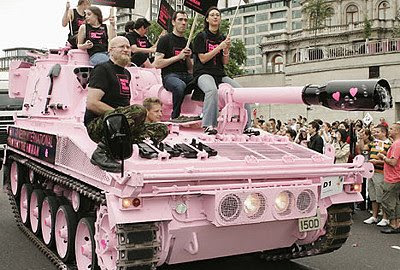
The Gay Bomb

In terms of great military plans, from the first ape-man who threw a rock at some other asshole ape and likely stretching into our Jetsons-like future with lasers and nanobots that will melt the faces of those who displease us, nothing is likely to ever top the Gay Bomb. The Gay Bomb is exactly what it sounds like; a weapon that would rend our enemies asunder with gay. Actual, weaponized gay.

The Plan:

The Plan

Wright Laboratory in Ohio proposed a number of non-lethal weapons to the Pentagon, as methods of crowd control are highly in demand these days and tear gas is about as cool as hippie daisies and beaded curtains. Instead, why not bathe your targets in an aphrodisiac chemical so strong that it caused all the enemy combatants to line up for mustache rides?

So maybe it's not a room full of stoners coming up with these ideas, maybe it's a house full of frat guys.

What went wrong:

In concept, it's probably true that an enemy is less effective when engaged in a massive, frenzied man-orgy. However, science has not actually perfected a way to make this happen to just any group of males.

Apparently the "how" was not the job of the idea department here, as the same lab proposed other weapons that would make bugs and rodents attack enemies, give them bad breath or mark them with a stink so they couldn't hide in general population. Again, that's all fine and good, if and when ways of doing those things actually exists.
Despite that, the Pentagon kicked this idea around for at least seven years, perhaps based on nothing more than the private fantasy of one frustrated general.


5.The Stargate Project:

The Stargate ProjectSadly having nothing to do with fighting aliens who pretend to be Egyptian gods, the Stargate Project was the CIA's way of saying goodbye to $20 million, but getting a fun story to tell the grandkids as a result. The project was an effort to discover if psychic remote viewing was real, because if it was then that would make spying a whole lot easier.

The Plan:

The Plan

Apparently the Commies were spending a lot of money on paranormal research during the Cold War. So if they were doing it, the CIA wanted a slice too, before the Reds whipped out some dude who could kill the President with his mind. They started the Stargate project in the '70s with a crack team of gifted psychics provided by the Church of Scientology. Seriously.

What went wrong:

They realized right away there probably wasn't anything to the whole psychic/remote viewing thing. And by "right away" we mean 25 years later. The project lasted until 1995.

Research into the project's validity concluded that while the remote viewers could get some details right, they were also doing a stellar job of getting a shitload wrong. In fact, many say the results were exactly the same as having a group of random hobos make wild guesses, and that you could just as accurately uncover enemy hideouts by having a camel spit at a wall map.
Hey, did we mention that we spent $20 million to find that out? Don't feel bad, the Soviets spent 500 million rubles to find out the same thing.


6.Project Habbakuk:

Project Habbakuk

When Winston Churchill got a hankering to smite his enemies, he aimed for the sky. Actually, he aimed for the ocean, where he wanted to build Holy Fuck That's Insane island. That was renamed Project Habbakuk. It was an aircraft carrier. It was an iceberg.

The Plan:
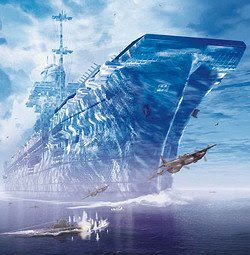
The PlanWanting to make an unsinkable aircraft carrier that would be so intense as to make enemies shit themselves uncontrollably, and with good reason, the Brits came up with the Habbakuk. Constructed from ice (ever try to sink an ice cube?) the plan was to make it 2,000 feet long with a deck to keel depth of 200 feet and walls 40 feet thick. It would displace 2,000,000 tons (compared to the Navy's current Nimitz class carriers that displace 100,000 tons). So, it was like, really big.

When ice proved to be not entirely feasible a material to build an aircraft carrier out of, they switched to something called Pykrete, which was just ice and wood pulp. It was intense stuff that deflected bullets and since this idea was already probably the craziest thing anyone had ever heard of, why the fuck not?

What went wrong:

Practicality. A small version had been constructed in Canada that weighed 1,000 tons and was only 60 feet long to show that the idea could work. It took three summers to melt the damn thing. The full-scale model would take $70 million, 8,000 people and eight months to finish, the finished product could only travel at six knots and once it arrived where it was going, it would still be made of fucking ice.


7.The Sun Gun:

The Sun GunDestroying your enemies from space is the goal of every angry 4th grader and Scientologist. Unbeknownst to many, it was also the goal of the Nazis, who figured a space station/death ray combo would have been gangbusters.


The Plan:

The Plan

Appropriating the work of less genocidal minds, Nazi physicists began work on an idea that would put a giant mirror in orbit. The mirror, which they planned to design from about one million tons of metallic sodium, would burn cities to the ground, boil reservoirs, crisp people like bacon and probably make all kinds of kids with magnifying glasses huddled over ant hills feel grossly inadequate.

The mirror would be on a space station manned by Nazi spacemen with magnetic boots to help overcome weightlessness, with oxygen provided by on-board pumpkin patches and electricity provided by solar powered steam dynamos. The cafeteria would presumably have food deep fried in love and the rec room would be structured out of the dreams of children and unicorn gonads.

What went wrong:

We did. "We" being all the non-Nazi assholes, the more colloquial name for the Allied forces. When it became clear that we were going to win the war, the US began taking German scientists out of the country and this plan, along with many others, was abandoned. Also, the epic, grand scale, and mind-bogglingly retarded nature of the entire idea was apparently a roadblock that needed to be overcome too, since we couldn't even build the damned thing now, in 2008, if we wanted to.
And trust us, we want to.


8.Project Orcon:

Project Orcon

A real pain in the ass during WWII was the enemy constantly trying to not get bombed. Ways of jamming guidance systems for homing missiles meant a lot of targets went unblown up, so effort was put into finding a way to guide a missile that couldn't be jammed.

The Plan:

Every psych 101 students' favorite sleep aid, BF Skinner, proposed the idea of using pigeons. Put a pigeon in a bomb and have the target displayed on screen for it. The pigeon would constantly correct the course by pecking on the image of the target in the center of the screen. Jam that, Nazi assholes.


What went wrong:

Even though a chunk of change had been dropped on the project, the military abandoned it. Some say it was just too weird for them, while the time involved in training the pigeons had also been cited. One of the problems was the range of the weapons, as they relied on an optical system, since the pigeons had to see what they were pecking at. If the bomb went too far off course, the pigeons would have to correct for themselves and the bomb. Another problem was that it was a bomb guided by a fucking bird.

9.The Great Panjandrum:


The Great Panjandrum
Getting through enemy fortifications is always tough, what with their insistence on constructing defenses out of stone and other non-meringue based substances. Sometimes conventional weapons just can't break through, and such was the case with the concrete defenses that were part of the Third Reich's Atlantic Wall that ran up and down the west coast of the European continent. So the Brits came up with the Panjandrum, insanity's answer to "what could we do to make explosives more dangerous?"

The Plan:
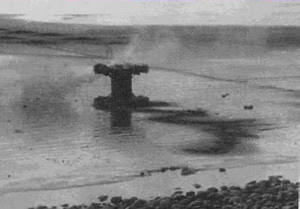
The PlanSo how do you get a tank-sized hole in a concrete wall? Well, they created two giant, wooden wheels joined by a central drum stuffed with explosives. On each wheel they strapped rockets as a means to propel it forward at speeds of about 60 miles an hour.

What went wrong:

You can probably guess. The rockets that moved the thing had a habit of flying off during tests, sending the entire structure off course, which we're thinking created a number of safety issues. After adding more rockets and another wheel, it was tested again and this time it turned right back to sea.

Finally, after many tweaks, it was ready to be tested in front of Navy officials, scientists and journalists.

How could this go wrong?

The ridiculous thing started rolling off as planned, but then like a drunken hussy with vertigo on a dance floor, it started careening all over the place before making a beeline for the assembled Navy brass, discarding rockets and wobbling around before thankfully collapsing and exploding. Moments later, the Roadrunner went zipping by.


10. The Bat Bomb:

The Bat Bomb Working on the premise any weapon is cooler if it flies in the night on leathery wings, Bat Bombs were proposed by a dental surgeon in the '40s. Naturally the President thought it was awesome so a plan was rolled out to make the night unsafe for anyone that didn't want to have small explosives get stuck in their hair.

The plan :


planBecause bats can carry a good amount of weight and tend to sneak into buildings and such, the plan was to make an army of flying rodent suicide bombers and release them over Japan. The little fellas had small napalm explosive kits made for them, which were probably the cutest incendiary devices ever, and then cases were constructed that would be dropped from B-29s, releasing the bats.
At dawn, they'd flee to buildings until the timers on their little bombs went off. So far, so fucking crazy.

What went wrong:

Things got sketchy when some armed bats were accidentally released and set up shop under a fuel tank on an Air Force base. So, yeah, that burnt to the ground. But, hey, it proved the damn things worked, so the people involved looked at that as a silver lining.

Given that the bomb casings they'd made for the bats could hold over 1,000 bats, they assumed just one bomber could hold up to 200,000 little flaming night terrors and some initial test data concluded these bat bombs were actually superior to regular fire bombs.
But after a couple million bucks in funding, the plan was scrapped. The plan was moving forward too slowly, the bats were unpredictable and the guys at the Manhattan Project were talking about having some kind of miracle bomb that could do the work of like, a million bats. (source: cracked)

Thursday, June 5

Top 10 deepest lakes in the world

1. Lake Baikal:

Lake Baikal

Also known as the “blue eye of Siberia”, lake Baikal is located in Southern Siberia near R near the Russo-Mongolian border. Famous for being the deepest lake in the world with a maximum depth of 5,369 feet it holds a volume of water larger than that of all the great lakes combined.
Lake Baikal is a great eco-system where more than 1,700 species of flora and fauna live; two thirds of them only to be found here. Completely surrounded by steep mountains and dense forests, the lake has an estimated age of 25-30 million years, making it one of the most ancient lakes in geological history.

2. Tanganyika Lake:

Tanganyika LakeDivided between Burundi, the Democratic Republic of the Congo (45%), Tanzania (41%) and Zambia, Tanganyika is the deepest fresh water lake in Africa and the second in the world with a maximum depth of 4,823 feet. The lake was “mistakenly” discovered in 1858 by two British explorers, Richard Burton and John Speke, in their quest to find the Nile’s source.
A recent story on National Georgraphic talks about a cold-blooded serial killer on the shores of Lake Tanganyika. Called Gustave, it was a 20 feet long crocodile that weighted 2,000 pounds and was responsible for killing hundreds of people.

3. O’Higgins/San Martín Lake:

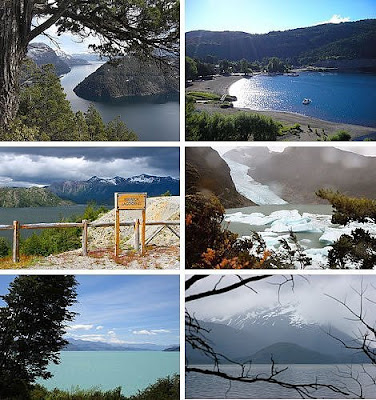
O’Higgins/San Martín Lake Located in Patagonia, between the Aysén Region and the Santa Cruz Province, the lake is called O’Higgins in Chile and San Martin in Argentina. It is the deepest lake in the Americas with a maximum depth of 2,742 feet (measured near the O’Higgins Glacier). The lake is very irregular consisting of eight well-defined arms with milky light-blue water coming from the suspended rock flour.

The lake is named after South American heroes José de San Martín of Argentina and Bernardo O’Higgins of Chile, who fought together for the liberation of Chile.

4. Lake Malawi:

Lake Malawi

Also known as Lake Nyasa, Lake Malawi is the most southern lake in the East African Rift valley system, located between Malawi, Mozambique, and Tanzania. At 2,316 feet deep, it’s the second deepest lake in Africa and thanks to the tropical waters it has more fish species than any other lake on Earth.
Researchers have studied sediments from core samples of Lake Malawi, which revealed that 100,000 years ago, water levels dropped to about 2,000 feet, turning the land around the lake into semi-desert and arid scrubland habitat. According to some, this may be why early man fled from Africa to colonize other parts of the world.

5. Caspian Sea:

Caspian Sea

Between the southern areas of the Russian Federation and northern Iran, lies the largest enclosed body of water on Earth. It’s an endorheic lake with salty water (salinity of approximately 1.2%) that was landlocked due to continental drift 5.5 million years ago. An ancient remnant of the Tethys Ocean, (just like the Black Sea or the Mediterranean Sea) it is the third deepest lake in the world going down to 3,363 feet.
Fauna in the Caspian basin is very rich: great numbers of sturgeon (that’s where you get the great caviar), the Caspian seal and some fish endemic to the Caspian Sea like the Kkturn (Caspian white fish), Caspian roach, Caspian bream and an array of rare species of salmon only to be found in that area.
The Caspian Sea is very rich in energy resources like oil and gas deposits, which have been tapped since the 10th century. These days, the oil in the Caspian basin is supposed to be worth $12 trillion.

6. Issyk Kul Lake:

Issyk Kul Lake

Between the southern areas of the Russian Federation and northern Iran, lies the largest enclosed body of water on Earth. It’s an endorheic lake with salty water (salinity of approximately 1.2%) that was landlocked due to continental drift 5.5 million years ago. An ancient remnant of the Tethys Ocean, (just like the Black Sea or the Mediterranean Sea) it is the third deepest lake in the world going down to 3,363 feet.
Fauna in the Caspian basin is very rich: great numbers of sturgeon (that’s where you get the great caviar), the Caspian seal and some fish endemic to the Caspian Sea like the Kkturn (Caspian white fish), Caspian roach, Caspian bream and an array of rare species of salmon only to be found in that area.
The Caspian Sea is very rich in energy resources like oil and gas deposits, which have been tapped since the 10th century. These days, the oil in the Caspian basin is supposed to be worth $12 trillion.

7. Great Slave Lake:

Great Slave Lake

Also known as the Grand lac des Esclaves after the Slavey North American Indians, it covers 11,000 sq miles in the Northwest Territories of Canada and goes down to 2,015 feet which makes it the deepest lake in North America. Because of the low temperatures in the area, for about eight months of the year, the lake is at least partially frozen, while during winter, the ice is so thick that trailer trucks can pass through.
There is currently no physical evidence to suggest that an unidentified large creature is living in the Great Slave Lake, but many people traveling to the lake have said otherwise. Some talk about a large hump in the water, usually mistaken for a rock until it submerges, or an alligator-like body, with a head like that of a pike.
From his house, a Roman Catholic priest even saw a large dragon-headed creature that rose six to eight feet above the water and moved rapidly on the shores of the lake. The creature was subsequently named Ol’Slavey.

8. Lake Vostok:

Lake Vostok

Out of the 140 sub-glacial lakes on earth, Vostok is the largest and the deepest, with a maximum depth of 2,950 feet. Beneath Russia’s Vostok Station, 13,000 feet under the surface of the central Antarctic ice sheet, may be the most unspoiled lake on Earth. British and Russian scientists only discovered it in 1996.
The average water temperature is -3 °C and the reason why it is still liquid below freezing is the high pressure from the weight of the ice above it.
Scientists also discovered that the ice core may be 420,000 years old, meaning that the lake could have been sealed for over 500,000 years and the water beneath could be doubly as old.
So far there isn’t any proof of life in LakeVostok. Notwithstanding this, in case there are species living beneath the murky depths, they are most likely to have evolved special features in order to survive the lake’s oxygen-rich environment.

9. Crater Lake:

Crater LakeWith a violent volcanic past, the caldera lake in the Crater Lake National Park, Oregon, is a place of immeasurable beauty. Surrounding cliffs of up to two thousand feet high, two small islands and spectacular blue water, make this “outdoor laboratory” the perfect place for photographers.
Crater lake is the deepest lake in the United States with a maximum depth of 1949 feet. It may also have one of the purest water, in North America, (in terms of absence of pollutants) thanks to the generous amounts of winter snow that supplies it with water.
It was created when Mount Mazama (12,000 feet high) collapsed 7,700 years ago following a large eruption, but the legend has more details. The Klamath Indian tribe talks about a raging war between Llao, the spirit of the Below-World who lived in Mount Mazama, and Skell the spirit of the Above-World.
Llao felt in love with Loha, daughter of the Klamath Indian chief, but got rejected and decided to punish humans with the curse of fire. Skell came in to help and after a long battle he managed to defeat Llao, whom he imprisoned deep down into the Under-World, collapsing the top of the Mount Mazama over. At last he wanted peace and decided to cover the pit with magnificent blue water.

10. Lake Matano:

Lake MatanoWith a tectonic origin and located in South Sulawesi in Indonesia, Lake Matano is an important freshwater resource in the area and the country’s deepest lake, with a maximum depth of 1936 feet. It drains from Patea River and later flows through a waterfall into Lake Mahalona (the Malili Lakes).
Lake Matana is famous for its extremely clear waters and the many endemic fish species which have arisen from a single ancestor diversified over time. (Source:environmentalgraffiti)

Older Post ►
 

Copyright 2011 Top 10 is proudly powered by blogger.com | Design by BLog BamZ